Fake Rolex vs Real Rolex: What Are the Actual Differences?
Quick Verdict
In 2026, the gap between a top-tier fake Rolex (the highest 1:1 tier) and a genuine Rolex is rarely a single obvious detail. The difference is usually a collection of small signals: how cleanly edges transition, whether the bracelet stays comfortable after long days, how the crown behaves when you’re setting the time in a hurry, and—most importantly—how consistent the watch remains after weeks of normal wear.
A practical way to think about it: “Looks right” is step one. “Feels right every time you touch it” is the real separator.
If two watches look similar in photos, start judging them by touch points: crown, clasp, bezel action, and how the date changes.
What fake Means Here (And Why That Matters)
People use fake as a single bucket, but it covers a wide range. Here, “fake Rolex” means the highest 1:1 tier—built from accurate references, with modern machining and careful assembly. This is the tier many buyers refer to when searching terms like rolex replica, replica rolex, or replica watches.
A genuine Rolex, on the other hand, is less about one magic ingredient and more about repeatability. The same model should feel nearly identical across examples: consistent finishing, consistent assembly, consistent performance. That uniformity shows up in the boring places—tolerances, contact surfaces, and long-term stability.
Where Differences Actually Show Up
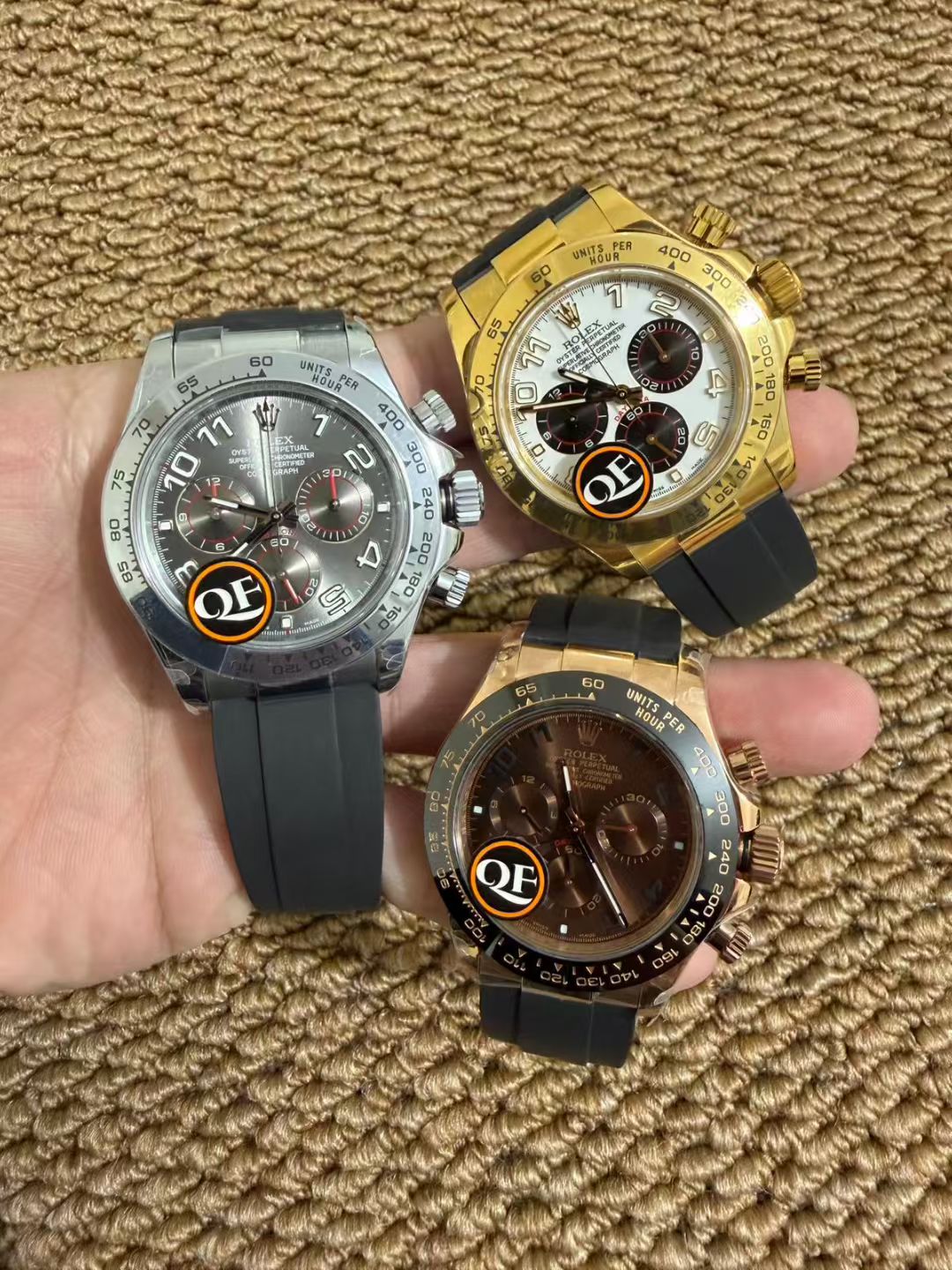
1) Finishing transitions (the “edges” story)
Macro photos make everything look dramatic, but real-life checks are simpler: look at how brushed surfaces meet polished surfaces. On genuine pieces, transitions tend to be crisp and controlled without feeling sharp. On high-end 1:1 builds, you may see transitions that are close, yet slightly softer or less uniform when the light hits at an angle. It’s subtle, but once you notice it, it’s hard to unsee.
2) Dial calmness vs. dial loudness
Many top-tier builds get the layout right: markers, hands, spacing. The difference is often in how “calm” the dial looks up close. Genuine printing tends to be clean and consistent in thickness. Some replicas look technically correct but a touch heavier or less uniform under magnification—especially around small text and minute tracks.
3) Bracelet articulation and clasp confidence
This is where people often change their mind after purchase. A bracelet can look perfect and still feel slightly stiff, slightly gritty, or slightly “clicky” when it flexes. Genuine bracelets typically articulate smoothly and sit comfortably for long stretches. With replicas, comfort can be excellent at first, but the clasp bite point and link edges are what decide whether it stays enjoyable.
Hands-On Checks That Matter
If you want a comparison that feels useful rather than theoretical, use a short checklist. These checks don’t require special tools—just good light and a few minutes of handling.
- Crown threading: does it start cleanly, or do you need to “hunt” for the thread?
- Time setting feel: when you pull and turn the crown, is resistance smooth and predictable?
- Date window & magnification: does the date look centered and easy to read without distortion?
- Bezel action (if applicable): does it feel controlled, with even clicks and no sloppy play?
- Clasp close: does it shut with a confident snap, or does it feel shallow?
Quick tip: if the crown and clasp feel “fussy,” the watch will feel fussy every day. Cosmetics don’t fix that.
Movement, Setting Feel, and Timekeeping
Day-to-day accuracy is a trap comparison because even good mechanical watches can vary with lifestyle (desk work vs. active days), storage position, and winding habits. The more revealing question is whether the watch behaves consistently week after week.
Genuine movements tend to settle into a stable pattern—your watch becomes predictable. Many high-end replicas can be stable too, but variance is more common across examples. Some pieces run impressively steady; others drift depending on how they’re worn. When you compare, focus on predictability: smooth winding, clean date change behavior, and consistent timekeeping trend over a normal week.
Aging: The 90-Day Reality Test
If the first day is the honeymoon, day 90 is the truth. By then, skin oils, dust, and everyday knocks have tested the contact points: crown tube, clasp, bracelet edges, bezel action. Genuine watches typically maintain their “tight” feel longer and age in a controlled way. High-end 1:1 pieces can hold up well too, but aging tends to be less uniform—one example stays crisp, another develops tiny annoyances.
This is why long-term satisfaction is often about the unglamorous parts: how the watch feels after a month of commuting, how the clasp behaves after repeated open-close cycles, and whether the bracelet remains comfortable on warmer days. Those are differences you can’t evaluate from marketing photos alone.
Side-by-Side Summary
| Category | Top-tier 1:1 fake | Genuine Rolex |
|---|---|---|
| First impression | Often very convincing visually | Reference standard |
| Finishing transitions | Close, sometimes slightly softer | More uniform and controlled |
| Touch points (crown/clasp) | Can be excellent, more variance | Consistently predictable |
| Timekeeping behavior | Generally good, consistency varies | Stable and repeatable |
| Aging after months | Depends heavily on the example | More uniform long-term stability |
FAQ
Can most people spot the difference without a side-by-side?
Usually not. In many cases the most noticeable differences show up through handling and long-term wear, not a quick glance.
What’s the single most revealing hands-on check?
Crown feel and threading. If setting the time feels inconsistent or fussy, it tends to stay that way in daily life.
Do top-tier replicas keep accurate time?
Many do. The more useful measure is week-to-week consistency rather than a single day’s result.
Why do two “same tier” replicas feel different?
Small differences in assembly tolerance and finishing can change how the crown, clasp, and bracelet behave—even when photos look nearly identical.
Are visual differences mainly on the dial?
Dial details can differ under magnification, but comfort and touch points often matter more for ownership satisfaction.
What changes most after a few months?
Bracelet comfort, clasp tension, and crown feel are common areas where long-term differences become more noticeable.
How should a buyer compare options quickly?
Use a short routine: crown threading, time-setting resistance, date window centering, clasp confidence, and a week-long timekeeping trend.